Enter
To perform a search
The term eco township is appearing more frequently in residential property brochures. Meanwhile, Jakarta’s green coverage has shrunk dramatically—from 45% to just 20% over the past 25 years.[1]
This contrast highlights how rare it is to find developments that genuinely prioritize green open spaces rather than simply featuring a small park in marketing materials.
In reality, eco townships have clear definitions and measurable standards that are legally recognized. As such, the term should not be used carelessly. Before being persuaded by a “green” label that looks appealing on the surface, it’s worth understanding what truly defines an eco township.
So, what distinguishes an eco township from a residential development that simply includes a park?
By definition, an eco township is a large-scale residential development that incorporates sustainability principles from the master planning stage, rather than adding green features after the development has already been completed.
The difference lies in the planning sequence.
Conventional housing developments often incorporate green open spaces in between clusters after the primary layout has been finalized, mainly as an aesthetic enhancement.
A sustainable township takes the opposite approach. Green open spaces, drainage systems, and green building elements are designed as an interconnected system from the very beginning.
In practice, this means determining green space allocations, water infiltration areas, and building orientations simultaneously with the overall site planning. As a result, these elements are not simply added after the area becomes densely developed.
This planning approach is also what determines whether the “eco” label attached to a residential project is genuinely meaningful or merely a marketing embellishment.
What truly qualifies a development as one that seriously embraces sustainable living?
The following three elements are interconnected. If one is missing, the effectiveness of the other two is compromised.
Article 29 paragraph (2) of Law No. 26/2007 requires urban areas to allocate at least 30% of their land as green open space (RTH), consisting of 20% public and 10% private green space, a requirement further reinforced by Ministerial Regulation ATR/BPN No. 14/2022.[2]
The World Health Organization (WHO) also recommends access to public green spaces of 0.5–1 hectare within a 300-meter radius of residential areas.[3]
These are highly specific standards that go far beyond simply having a park within a housing complex.
An eco township requires more than drainage channels. Water infiltration systems are also a fundamental requirement.
Rather than simply directing water away, these systems are designed to work alongside green open spaces.
The larger the green areas, the greater the soil’s capacity to absorb water. An effective drainage system reduces flood risks instead of merely transferring excess water elsewhere.
The use of environmentally responsible materials—from structural components to low-emission paints—helps reduce the carbon footprint of construction from the outset.
Their benefits also extend to energy efficiency, the advantages of which become increasingly noticeable over the years.
What are the advantages of living in a green community that consistently implements these three elements?
Green open spaces naturally filter pollutants from their surroundings.
Every square meter of green open space can filter up to 200 grams of pollutant particles annually.[4]
This figure helps explain why the atmosphere in well-planned green communities feels noticeably different from densely populated developments with limited green spaces.
The benefits go beyond simply enjoying fresher air. Environmental health literature consistently links cleaner air and access to open spaces with improved long-term quality of life.
This relationship has been repeatedly confirmed across numerous studies.
The logic is straightforward: communities that consistently preserve their green spaces tend to be more resilient against environmental deterioration than densely developed areas that gradually lose their green coverage.
This factor directly influences how well your home’s resale value can be maintained over time.
In other words, location and building design are not the only determinants of property value.
The standards and benefits discussed above are not merely theoretical concepts.
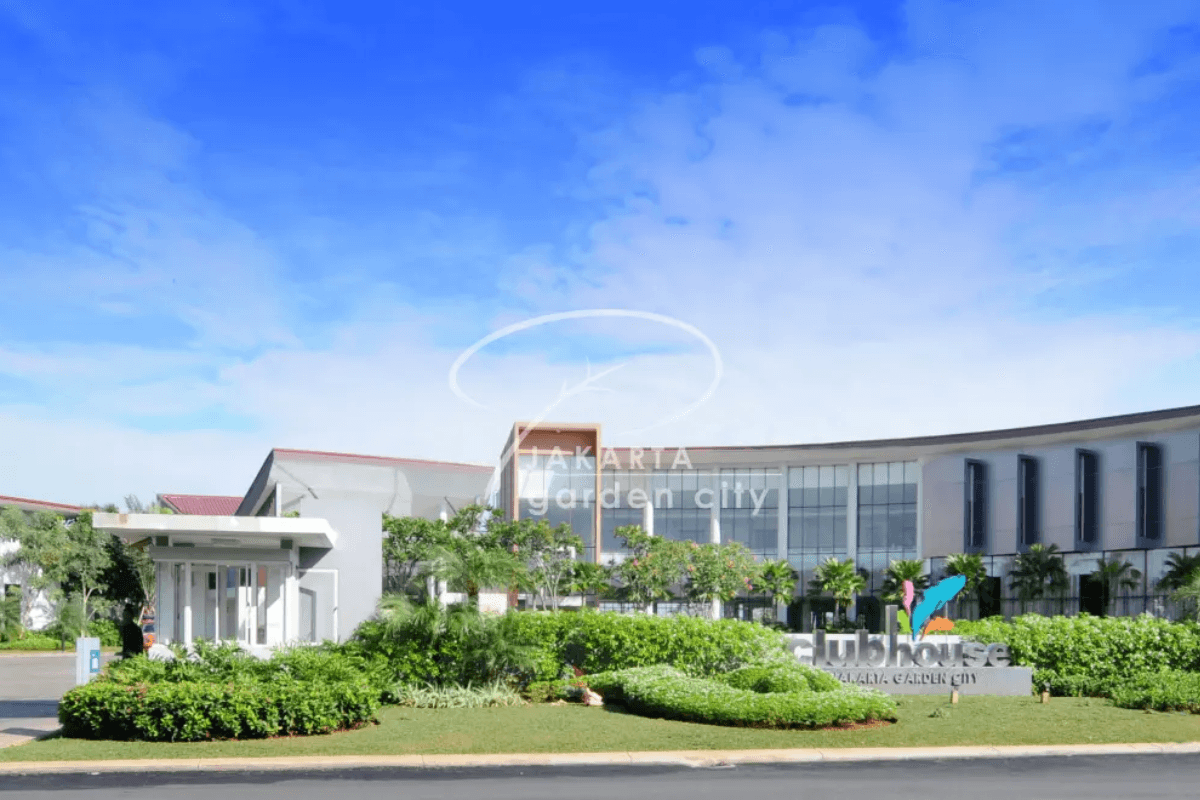
Jakarta Garden City allocates 40% of its total land area to green open spaces, exceeding the national minimum requirement of 30% stipulated under Law No. 26/2007.[5]
This commitment can be verified directly.
Its supporting features also extend beyond generic parks. The development includes themed gardens and artificial lakes that serve dual purposes: enhancing aesthetics while functioning as water infiltration areas.
These two functions operate simultaneously rather than separately, unlike residential projects that simply add decorative ponds without drainage functionality.
One of the key advantages of this approach is that the integrated drainage system and artificial lakes help mitigate flood risks within the community.
As a result, these features are not merely decorative additions but form part of a comprehensive water management strategy that has been incorporated since the earliest stages of planning.
This type of approach distinguishes genuinely sustainable, environmentally friendly communities from developments that rely solely on marketing claims without any technical foundation behind them.
Regulations allow you to compare measurable figures, and drainage systems can be tested rather than merely described in brochures.
That is the difference between communities that truly embrace sustainability and those that simply attach a green label to their marketing materials.
Before believing claims of being “eco-friendly,” examine the evidence:
Are the numbers verifiable?
Do the systems genuinely function?
Or are they merely decorative features?
Ultimately, the concept of an eco township becomes even more credible when it withstands critical scrutiny—not when it is allowed to remain nothing more than a marketing buzzword.
With green open space allocations that exceed national standards and drainage systems integrated into the master plan from the beginning, Jakarta Garden City offers tangible proof that you can evaluate for yourself.
Contact the JGC team to see its implementation firsthand and discover a unit that suits your needs.

| Monday - Saturday | : | 09:00 - 20:00 WIB |
| Sunday | : | 09:00 - 21:00 WIB |